Trees: Long-Lived Ecosystems Temporarily Under Our Protection
If you are a New York Times reader, you may recently have read How Do You Mourn a 250-Year-Old Giant? by Margaret Renkl* in which she was saddened when a 250-year-old black walnut tree on public land in a Cleveland suburb was cut down. The tree was cut down by siblings who believed the tree stood on family land. The family needed money, and the tree was sold to a logging company for $2,000.
Renkl expressed compassion for the family who cut down the tree to meet family expenses. And she noted that homeowners with good intentions often feel the need to remove trees that pose a danger in storms, which are now more frequent and violent. In some cases human needs conflict with a trees need to survive.
While public policy to protect trees on public land is slowly changing as sustainability and environmental advocates are heard, protecting trees on private land is a challenge that would be harder to address since when we own property, we own the trees as well.
Renkl’s recommendation to truly protect trees is “a profound paradigm shift that transcends politics. We need to stop thinking of trees as objects that belong to us and come to understand them as long-lived ecosystems temporarily under our protection. We have borrowed them from the past and owe them to the future.”
The East 11th Street Block Association will take Renkl’s advice and continue to do our best to look at our trees as long-lived ecosystems temporarily under our protection — borrowed from the past and owed to the future.
Our tree maintenance program with Urban Arborists goes back more years than we can remember. The oldest newsletter I could find today was from 18 years ago (2004), and in it we noted that our Arbor Committee was working with Parks on diseased trees, securing permits for new trees and arranging for maintenance and care of trees.
Renkl cited these benefits of city trees, “In cities, trees cool hot streets, absorb pollution, improve air quality, limit storm water runoff, prevent erosion, enhance the physical and mental health of human beings, and provide desperately needed habitat for wildlife. Trees are a public good. Protecting them in public areas is a no-brainer for municipal workers.”
We couldn’t agree more, and you’ve heard those words from us in past newsletters. In New York City, the Parks Department has regulations to protect trees and permitting is required to work on City trees. Our Year Round Tree Care Program includes 1) arborist’s survey(s); 2) securing NYC permits (Urban Arborist handles); 3) dormancy pruning; 4) soil amendments two times a year; 5) summer watering program; 6) survey of trees in summer for dead branches & disease with related pruning as called for; and in past years we expanded the size of the tree wells where possible — all of this paid for by the East 11th Street Block Association with your donations.
We pause here to thank friends and neighbors whose donations have enabled us to carry out a robust Tree Care program over many years.
We recently authorized pruning and maintenance during dormancy. Here are some of the items on the list:
Clean crown & repair storm damage on Pagoda tree
Clean crowns on Linden trees
Clean crown & pull back Basswood (American Linden)
Structurally prune Willow Oaks
Clean crown & repair damaged limbs on London plane tree
Structurally prune & remove adventitious growth on Plum tree
Pull back & clean crown & remove damaged branches on Pin Oaks
Treat base of Pagoda tree recovering from previous truck damage; treat at base to help close wound
Clean & Repair 2 Pear trees
In the July/August 2021 newsletter, we reported how lush and healthy our trees were. And, you will be reminded of the TLC we give our trees again in summer 2022 when they are again lush with leaves and blossoms and the honey-like aroma of our Linden trees is wafting through the air.
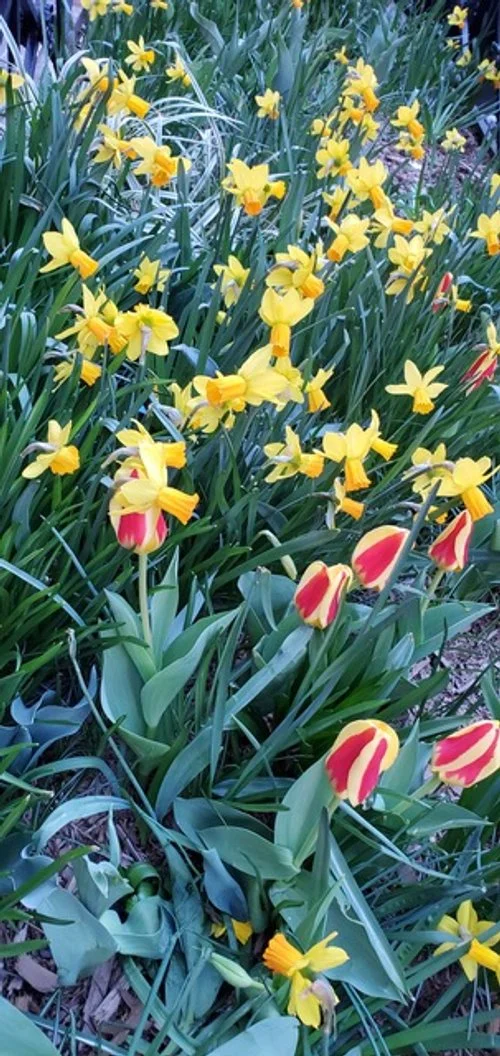
Mulching. After the ground froze in January, the tree wells were mulched. All is ready for spring bulbs to surface at the first signs of spring.
Coming Soon…
*How Do You Mourn A 250-Year-Old Giant?
Margaret Renkl
New York Times Opinion
Wednesday, January 26, 2022


